
So how do we work to reduce greenhouses gas emissions?
Our approach focuses on tracking our greenhouse gas (GHG) emissions and measuring progress against targets approved by the Science Based Targets initiative (SBTi). This helps find hotspots for interventions.
Where do we generate ghg emissions?
These GHG emissions are what we produce directly from our own operations. They include electricity use, heating and cooling of stores, offices and warehouses and use of BESTSELLER vehicles.
These GHG emissions are beyond our direct control as they originate from activities outside of our own operation. They include raw material, yarn and fabric production, garment manufacturing, transport, packaging, use of sold product and even the product’s end-of-life.
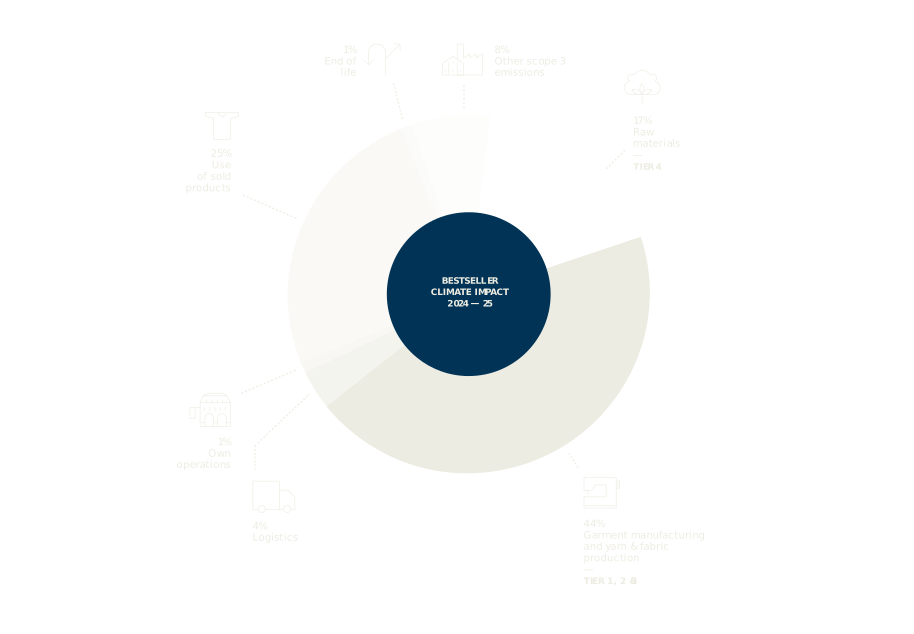
The majority of our climate impact comes from the production of raw materials and the processes required to turn them into yarn, fabric and garments.
WHAT ARE WE DOING TO LOWER OUR EMISSIONS?
Whereas Scope 1 & 2 merely accounts for 1% of our total emissions, the majority of our impact lies within scope 3 emissions. That’s a fact – and a challenge.
Like other fashion companies, our direct influence over the supply chain is limited. Many supplier factories are located in countries where infrastructure for transitioning from fossil fuels to renewable energy remains underdeveloped.
The challenge requires collective action and collaboration across the entire fashion industry. In order to reduce our emissions, we prioritise our efforts in areas where we can drive meaningful reductions.
We are sourcing renewable electricity from our parent company’s solar power plant to cover our electricity use.
Through a power purchase agreement (PPA), we are sourcing enough renewable electricity from the solar power plant to match our electricity use in our owned and operated buildings in the European Economic Area.
The electricity from the plant in Denmark cannot be included in the energy mix outside Europe, which is why BESTSELLER's electricity consumption outside Europe will be covered by contracts with other local renewable energy plants.
Alongside renewable electricity, we focus on energy efficiency measures, including LED lighting, energy management systems, and optimised heating, cooling and ventilation solutions across stores and other facilities.
Reducing emissions from raw material production is a key component of our climate strategy. We apply our own certified and branded approval process to determine which materials qualify within that portfolio. It includes materials across key fibre categories such as cotton, polyester, man-made cellulosic fibres and wool.
By combining material innovation, and sourcing focused on improved traceability, we work to reduce emissions associated with raw material production.
We rate our suppliers’ environmental performance in order for our brands to make informed decisions when choosing a partner.
To strengthen the performance of our suppliers, we support them through training programmes or collaborative initiatives that can include assessments, capacity building, and guidance and tools for improving performance.
We engage in industry-wide collaborations and make targeted micro- and macro-level investments. Working closely with our supply chain partners to make targeted investments will help us reduce climate impact and drive systemic change.
We are testing design principles that enable recycling, disassembly, and reuse, turning textile waste into valuable resources.
We join industry initiatives focusing on product quality and innovation, and advocate for solutions that promote reuse and recycling.
We are testing how to integrate innovative business models that may help us minimise the need for virgin raw materials, allowing us to sustain economic growth through resource efficiency and reuse.
Feel free to read our annual report for more information on our climate-related activities.